 AION
Research / Retail Investor Field Guide
Lesson 8 of 11 | Mechanical Market Flows
IPO Anchor Lock-In: A Calendar, Not a Sell Signal
Mainboard IPO anchor shares have two lock-in tranches. Under current SEBI guidance, half unlock after 30 days and the other half after 90 days from allotment.
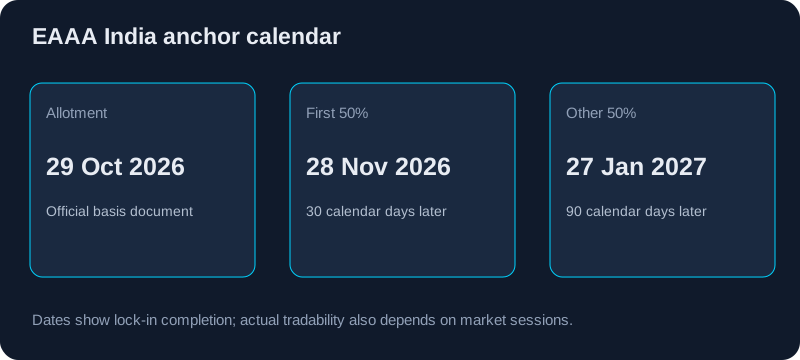
Worked example: EAAA India Alternatives Limited allotted shares on 29 October 2026, according to its exchange-hosted basis of allotment. Thirty calendar days later is 28 November 2026 and 90 calendar days later is 27 January 2027. The first date is a Saturday, so a trading-day interpretation must also check the exchange calendar.
What to look at
Start with the issuer's dated anchor allocation and allotment documents. Distinguish bidding, allocation and final allotment before putting dates on a calendar.
What the evidence establishes
The rule establishes when shares may become transferable. It identifies potential supply, not actual sale orders.
What it cannot establish
An unlock does not mean anchors sold, and a price move near the date does not prove the unlock caused it.
Observation exercise
Choose a mainboard IPO. Verify the anchor allotment date in the official filing, calculate both calendar dates, then inspect disclosed volume around them.
When to stay away
Stay away from a trade based only on a predicted anchor sell-off or a calendar date inferred from listing day.
Limitations
These dates show when restrictions end under the stated rule; they do not show a sale. Check the issue's actual prospectus, special allotment terms and current SEBI text before applying the arithmetic to another IPO.
Primary sources and related research
- EAAA India Alternatives basis of allotment, 30 October 2026
- SEBI investor guide, anchor lock-in split
- SEBI mainboard offer document, anchor terms
Related research: What the Consolidated Account Statement Shows.