The Multi-Asset Cross-Hedge: Why Crude Moves Nifty
Foreign investors hold Indian equities inside a global portfolio that also carries rupee, crude oil and risk exposure. When crude rises and the rupee weakens, they hedge by selling Nifty futures, whatever the domestic option chain says.
Indian indices do not trade in isolation. A large share of Indian equities is held by Foreign Institutional Investors, or FIIs, as one part of a global portfolio. An FII that holds Indian shares also holds, whether it wants to or not, exposure to the Indian rupee, to crude oil, and to global risk sentiment.
This is why a move in the oil market can show up in Nifty within hours, with no change in any Indian company.
The chain
- Crude oil rises. The usual cause is a geopolitical event.
- India's import bill grows. India imports most of the crude oil it uses, so a higher price widens the trade deficit.
- The rupee weakens. More dollars are needed to pay for the same oil.
- FIIs lose money on their rupee exposure. Their Indian holdings are worth less in dollars even if share prices have not moved.
- To hedge, FIIs short Nifty futures. It is the fastest way to reduce exposure to India without selling the shares themselves.
- Nifty falls.
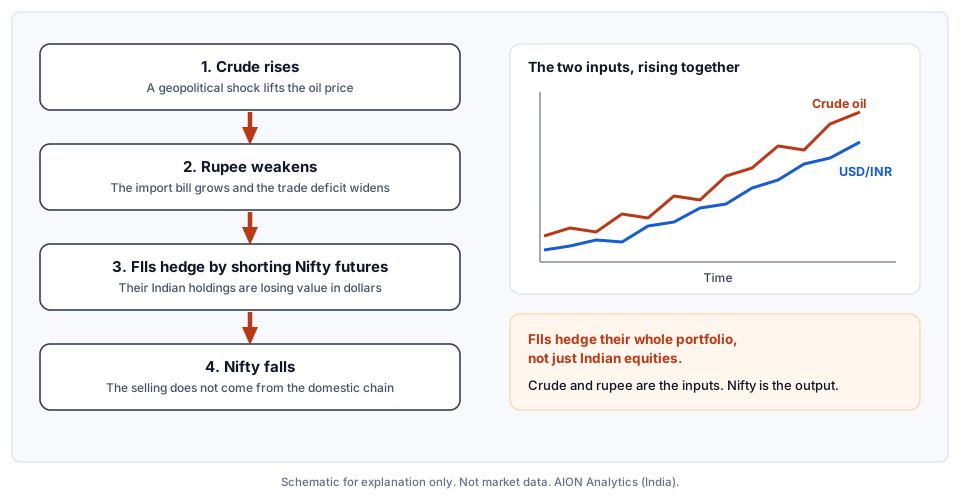
Figure 1. The path from crude oil to Nifty through the rupee and foreign hedging. Schematic, not market data.
Why the option chain does not stop it
The desks in Europe and the United States do not look at Indian Max Pain levels. They look at the risk of their global portfolio. Suppose their screens show crude at 91 dollars a barrel and the rupee at 96.50 to the dollar. Their models tell them to cut Indian equity exposure, and they do it, regardless of what the domestic option chain says.
This matters for anyone reading the chain. Max Pain, Call walls and Put walls describe how positions inside the Indian options market are arranged. The cross-hedge comes from outside that market. It is one of the outside shocks that break a pin, as the note on Max Pain describes.
What to look at
- The USD/INR rate. A rupee at fresh lows is the clearest sign that the chain is active.
- The crude oil price. Direction and speed both matter. A slow rise is absorbed more easily than a jump.
- How the two are moving against Nifty. When the rupee is breaking to new lows while crude is rising, hedging by FIIs can overpower domestic support.
What this note does not claim
The chain is a tendency, not a rule that holds every day. Crude can rise because global growth is strong, and equities can rise with it. The Reserve Bank of India can slow a fall in the rupee. Domestic buying has at times absorbed heavy foreign selling. FIIs also hedge in other ways, including through the currency market, so not every rupee loss turns into Nifty futures selling.
The crude and rupee levels quoted above are an illustration. This note does not publish a measured correlation between crude, the rupee and Nifty, and none should be inferred from it.